

The Grand Theft Auto franchise almost did not become what it is today and the look that came to define happened accidentally. In a career-spanning interview with IGN, Rockstar Games co-founder and co-creator, respectively, Dan Houser revisited the strange birth of Grand Theft Auto III, the game that invented the modern series and pretty much defined the entire open-world genre. The story runs through a near-bankrupt studio, a flop at E3 and the aftermath of 9/11, an event that reshaped the world and gave GTA III its now-iconic box art.
According to Houser, by early 2001, Rockstar and its parent Take-Two Interactive were "on the point of economic failure." The team was still struggling to finish the game. They believed in it anyway and took it to E3, where it died on the show floor. "Nobody cared about it," Houser recalled. We have written before about how GTA III pulled Take-Two and Rockstar back from the brink, but in that moment the game looked like a gamble that might sink the company, something former Rockstar North lead developer Obbe Vermeij also confirmed in the past.
GTA 6 giveaway
Win a full copy of GTA 6 Ultimate Edition.We're giving away full copies of GTA 6 Ultimate Edition in several draws through launch. Enter with your email, then join in once on the site. One entry per person.
Prize
A full copy of GTA 6 Ultimate Edition
Email first, then one site action during the draw window.
Then came the worst possible launch window. GTA III was due out roughly two weeks earlier, Houser said, until a few pieces of content that "would have been fine" felt like too much "in the exact aftermath of 9/11." So the team pulled the content out of the game, edited a couple of lines of dialogue, ran a quick content scan and shipped it to the public. Houser has described those changes as cosmetic and Rockstar once put the figure at around one percent of the game. Either way, GTA III reached the PlayStation 2 after Microsoft said no to it in October 2001, weeks after the attacks.
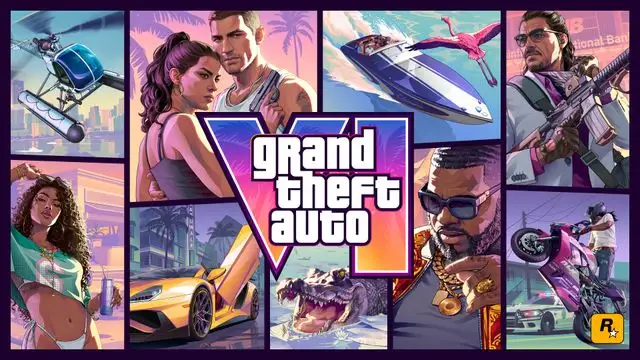
Interestingly enough, it's not the cut content but rather the bigger mark 9/11 left on GTA III is the one you still see on every box. Houser says the original cover art was "probably too offensive to release after 9/11," so Rockstar scrapped it and the now-iconic look took its place, the black-bordered grid of character tiles that every GTA has used since. In his telling, the artist Stephen Bliss knocked it out "in about two evenings."
Bliss has since filled in the details. He confirms 9/11 drove the change, sharing that the original cover took about six months to paint and was already going to print for the holidays when the attacks happened, after which Rockstar judged it too raw. Bliss says the replacement took him roughly a week, not a couple of evenings. He built the grid by cutting the non-violent images out of his existing painting rather than starting fresh. Houser remembers "burning buildings" on the old cover, though Bliss has only described a brief to avoid "weapons, buildings, fire" and the like.
GTA III's near-death year in 2001
When | What happened |
|---|---|
Early 2001 | Take-Two near economic failure, GTA III still unfinished |
May 2001 | GTA III shown at E3, nobody notices |
September 11, 2001 | The attacks force a short delay and minor content edits |
October 2001 | GTA III launches on PlayStation 2 |
Christmas 2001 to early 2002 | Steady sales turn it into a phenomenon |
From near-bankruptcy to phenomenon, the road GTA 3 traveled in a single year.
Success was neither guaranteed nor immediate. Even after launch, GTA III did not explode into mainstream popularity. It "just didn't stop selling," Houser said, with no single massive week, only a steady climb from October 2001 through Christmas and into early 2002.
It is a strange thing to say that GTA almost never became the juggernaut it is today. The series that began with a near-bankrupt studio and a game the industry ignored is about to deliver the most anticipated launch in gaming history. Grand Theft Auto VI returns to Vice City on November 19. The box art Houser and Bliss salvaged from a disaster has become one of the most copied looks in entertainment. Twenty-five years on, the whole empire traces back to a few weeks in late 2001 when almost none of it was guaranteed.