


A developer named Ziwen Xu is attempting to build a Grand Theft Auto VI-style open-world game using loops of AI agents, primarily Anthropic's Claude, and his stated goal is to beat Rockstar Games to launch. The project, called GT-Caliber, runs on daily public updates, an open GitHub repo, and live "vibe code" streams where AI agents write, test, and iterate on the game in real time.
It is ambitious, fascinating, and almost certainly not going to beat GTA 6 to anything except a conversation about what AI can and cannot do. In GT-Caliber's case, the agents are looping continuously, taking community feature requests, generating pull requests, and iterating on a playable game. Admittedly, it's genuinely impressive, if only as a demonstration of the speed of AI-assisted development.
GT-Caliber Day-by-Day Progress
Day | Date | What the AI Agents Built |
|---|---|---|
Day 1 | June 10 | Project launch; repo structured; chose Godot engine; Claude Max 20x; open call for contributors |
Day 2 | June 11 | Agent loop improved; downtown elements (accidentally LA skyscrapers instead of Florida); engine-switch debate |
Day 3 | June 12 | NPCs walking, cars on roads, improved shadows and reflections, weapons, in-game phones |
Day 4 | June 13 | Character and car models, actual driving, traffic rules, collision system v1, reworked movement, "wasted" screen |
Day 6 | June 15 | Intro cinematic, working main menu, loading screen, full front-end; "boots like a AAA game" |
Day 7 | June 16 | Major pivot from Godot to Unreal Engine after community pushback; "actually looks like GTA" |
Instead of a human writing every line of code, the developer is directing AI agents with high-level instructions and lets the agents generate, test, and refine the code themselves in a loop.
In seven days, the agent-driven pipeline produced player movement, driving, traffic, collision, NPCs, a UI, an intro cinematic, and an engine migration. As a proof of concept for how fast AI agents can scaffold a game, it is remarkable. As a GTA 6 competitor, it is a different story.
The project actually validates Strauss Zelnick and his dismissal of AI more than it challenges it. The Take-Two Interactive CEO has repeatedly called the idea that AI could make GTA "laughable" and stated that generative AI has "zero part" in the creative development of GTA 6's map, world, and story.
GT-Caliber, seven days in, accidentally generated Los Angeles skyscrapers when it was supposed to be building Florida. That single detail is the entire argument: AI agents can generate a generic open-world scaffold quickly, but they cannot generate the specific, intentional, culturally precise world that makes a Grand Theft Auto game what it is, and more importantly, what it isn't.
GTA 6 giveaway
Win a full copy of GTA 6 Ultimate Edition.We're giving away full copies of GTA 6 Ultimate Edition in several draws through launch. Enter with your email, then join in once on the site. One entry per person.
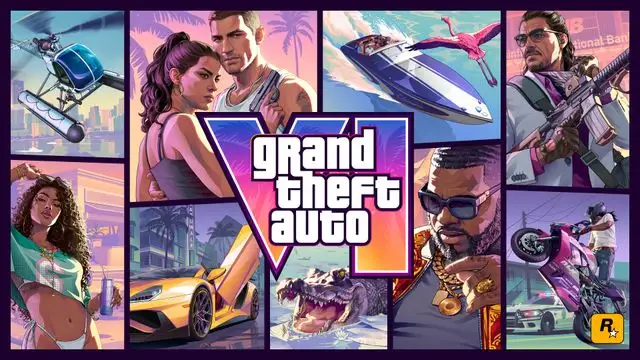
Prize
A full copy of GTA 6 Ultimate Edition
Email first, then one site action during the draw window.
A GTA game is a collection of choices: this neighborhood, that radio station, those jokes, these characters, a specific shade of Vice City neon. While GT-Caliber can build a sandbox, it cannot build a vision because nobody told the agents what the vision was, and the agents cannot invent one.
However, dismissing the project entirely is just as wrong as overhyping it. GT-Caliber is a public experiment in how far agent-driven development has come and the answer is "further than most people realized." The same machine learning Rockstar uses on the backend for matchmaking and economy management is a cousin of what GT-Caliber is doing.
Ironically, GT-Caliber is the best advertisement Rockstar could ask for. Each rough approximation of a GTA feature that the project ships demonstrates the gap between an AI-built sandbox and a human-made world. When GTA 6 launches on November 19 with its handcrafted Leonida, its written characters, and its 13 years of intentional design, the contrast will make Zelnick's point louder than any earnings call ever could.