

In March 2026, Take-Two Interactive CEO Strauss Zelnick sat down with The Game Business and called the idea that AI could create a game like Grand Theft Auto VI "laughable." He was not hedging. He was not couching it in corporate ambiguity. He said, with the directness of a man who has spent decades in the entertainment business, that the soul of GTA 6, the story of Jason and Lucia, the atmosphere of Leonida, the feeling of a world that breathes and reacts, must come from "human creativity and emotion."
Generative AI, in his view, cannot replicate what makes a Rockstar Games release, well, a Rockstar game.
It's a statement that, depending on where the games industry goes over the next decade, could define how people remember GTA 6 long after November 19.
See a featured GTA BOOM Bookie market here.
The market card is loading. If it does not appear, open The Bookie for the latest odds and active questions.
Open this market in The BookieYou see, if AI-assisted game development becomes the industry standard by 2028 or 2030, which appears increasingly likely based on where every major publisher except Rockstar is heading, then the next Grand Theft Auto might be the last game of its scale where every meaningful element was created by human hands.
Sure, humans will still make games, but it'll be the last where a human team made every creative decision from the ground up, without AI generating the assets, dialogue, animations, or world-building that the player actually experiences, which could very well be the most expensive act of stubbornness in entertainment history.
Zelnick is not anti-AI. He confirmed during a recent investor call that Take-Two is "actively embracing generative AI" with "hundreds of pilots and implementations across our company." He has previously spoken about AI's potential to drive efficiencies and reduce costs. He is not saying AI is useless. He is saying AI cannot replicate the human quality of creative vision that turns a collection of systems, assets, and code into something that feels alive.
His argument is specifically about the creative core, the writing, the direction, the emotional architecture, of a game like GTA 6. The story of Jason and Lucia trying to survive in a world stacked against them requires a human understanding of desperation, loyalty, betrayal, and hope, something Rockstar co-founder Dan Houser perfectly explained in an interview when asked why Grand Theft Auto 4 had such a different story.
GTA 6 guide
Grand Theft Auto VI: Everything We KnowRelease date, map, characters, gameplay and more, updated regularly.
The atmosphere of Leonida, the way the light hits wet pavement during what we can only presume is the wee hours of the morning based on the second trailer, the way a radio DJ segues between songs with just the right amount of cynicism, the way a passerby on the street mutters something that is simultaneously funny and sad, those are choices made by people who've lived through those moments.
AI can try to approximate and recreate these situations, but it lacks the emotional intelligence that makes Rockstar's games so nuanced and immersive.
The rest of the industry is not on the same page and it's understandable. If AI can reduce the cost of creating a game by 20 or 30%, and the player cannot tell the difference, then the financial incentive to adopt it is overwhelming.
After all, not every company has the green light to spend $3 billion to create a game and expect to make just as much within its first few months of launching.
AI-generated textures, environmental details, and procedural content have reached a quality threshold where distinguishing them from hand-crafted alternatives requires side-by-side comparison. The debate about whether players can "feel" the difference between a world built entirely by human hands and one where AI handles portions of the asset pipeline remains unresolved, and it may remain so for years.
Ironically, GTA 6 might actually help make the case for AI adoption. It has taken roughly seven years. It has required thousands of developers across multiple studios on multiple continents. The RAGE engine was likely rebuilt from scratch. The scale-down philosophy that defines Rockstar's process, build everything and then decide what stays, is the most labor-intensive approach to game development that exists.
If AI tools could have reduced that figure by at least a billion, or quite possibly more, or shortened the development time by a few years, would we have crucified Rockstar for using them?
GTA 6 giveaway
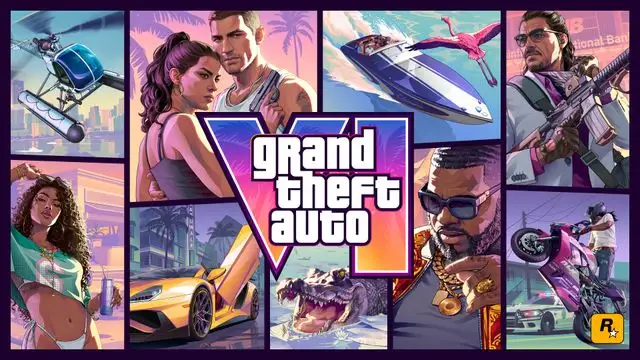
Win a full copy of GTA 6 Ultimate Edition.We're giving away full copies of GTA 6 Ultimate Edition in several draws through launch. Enter with your email, then join in once on the site. One entry per person.
Prize
A full copy of GTA 6 Ultimate Edition
Email first, then one site action during the draw window.
Again, the company that owns Rockstar is not anti-AI. It is selectively AI-skeptical in public while quietly exploring the technology internally, and the messy reality of that position just got put on blast after the people doing the exploring got fired.
In the meantime, while Rockstar insists on building GTA 6 by hand, everyone is using AI to generate fake GTA 6 content at an industrial scale. Unreal Engine 5 recreations of Vice City, AI-generated screenshots that crashed Take-Two's stock price, deepfake trailers, fabricated leaks. The technology that Zelnick calls incapable of making GTA is being used every day to convincingly imitate what GTA looks like, even if it cannot replicate what GTA feels like.
Rockstar may eventually adopt AI for GTA 7 or whatever comes next. Even GTA 6 almost certainly uses some automated processes in testing, pipeline management, and internal tooling that you could classify as AI-adjacent depending on how broadly you define the term. The claim here is that the creative output, the things the player sees, hears, and feels, all came from the creativity of human beings rather than machines.
Whether that makes GTA 6 a masterpiece or a dinosaur depends on what the industry looks like five years from now. If AI-assisted games achieve the same emotional depth and world-building quality as GTA 6 at a fraction of the cost, which is what tech mogul Elon Musk is claiming could happen, then Rockstar's approach will look like the last hurrah of a financially unsustainable model that only Rockstar alone can justify spending money on.
If AI-assisted games feel hollow, repetitive, or emotionally flat in ways that players can sense even if they can't put into the right words what it all means, then GTA 6 will look like the last time a studio committed fully to the idea that great games require great human effort.
GTA 6's choice, whether it proves visionary or quixotic, is what the game, and quite possibly, the entire studio, will carry into video game history alongside whatever critic score it earns and how much money it makes. It is the last game at this scale built this way, and we will not know what that means until we see what comes after.


