

Take-Two Interactive CEO Strauss Zelnick sat down with The Game Business this week and delivered what might be the most confident dismissal of AI's threat to the games industry that any major publisher executive has made publicly. When asked whether tools like Google's Project Genie could level the playing field and enable someone to create something on the level of Grand Theft Auto, Zelnick did not hedge.
"Not even the littlest bit," he said. "The notion that somehow new tools would allow an individual to push a button and generate a hit and bring it to many millions of consumers around the world, it's a laughable notion."
He compared AI-generated music to greeting cards. He pointed out that thousands of games already launch every year using existing tools, and the hits still cluster among large studios. He acknowledged AI's usefulness for asset creation and storyboarding but insisted that human engagement and creativity are what separate a product from a hit. On the surface, he is entirely correct. However, Zelnick's statement is also made partially possible because of his position.
When he says AI cannot make GTA, he is right. No AI tool is going to produce a game with the narrative depth, world density, cultural specificity, and decade-long development arc of the next GTA game, but the question was never whether AI could replicate Rockstar Games. The question is whether AI can produce something that is good enough to capture a meaningful portion of the attention and spending that players would otherwise spend on mainstream titles, and on that front, the answer is less clear.
In 2026, the music industry is playlists, background listening, algorithmic recommendations, and mood-based curation where "good enough" is, for tens of millions of people, genuinely good enough. The music industry has not collapsed because AI can generate passable tracks, but economically? It's changed. The artists in the middle, the ones who aren't considered top stars but aren't nobody either, are the ones feeling the squeeze the most.
In the video game industry, Rockstar is definitely not middle-tier. You could argue that none of the companies under Take-Two's umbrella are. From that perspective, Take-Two is definitely right. Rockstar and Take-Two don't have anything to worry about when it comes to AI. We can't say the same for the studios making solid $40 to $60 games that generate moderate returns.
GTA 6 giveaway
Win a full copy of GTA 6 Ultimate Edition.We're giving away full copies of GTA 6 Ultimate Edition in several draws through launch. Enter with your email, then join in once on the site. One entry per person.
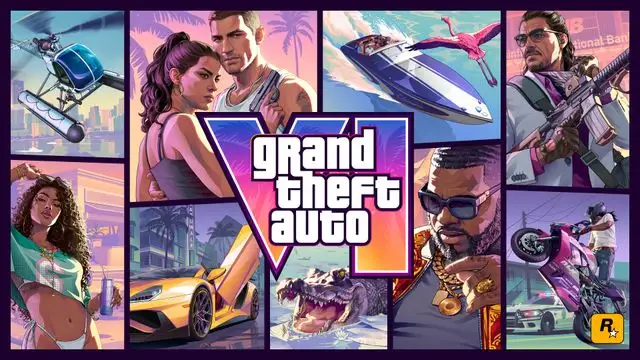
Prize
A full copy of GTA 6 Ultimate Edition
Email first, then one site action during the draw window.
For what it's worth, Take-Two is not philosophically opposed to using technology to reduce the human labor required to produce entertainment, and is doing so already. What Zelnick is opposed to is the idea that someone else could use that same technology to compete with what they're making. Make no mistake, we agree with Zelnick. AI can't produce the next GTA.
The level of craftsmanship, institutional knowledge, and sheer accumulated talent that exists at Rockstar Games is not something you can replicate with a prompt. The September 2022 leaks showed us early development footage of a game that, even in its unfinished state, exhibited a density of systems and detail that no AI tool on the market can approximate.
Former Rockstar North technical director Obbe Vermeij has spoken at length in our interviews about how the studio's best work emerges from a culture of iteration, internal competition, and obsessive refinement that is fundamentally human. No amount of AI tooling replicates that culture. Zelnick is right about that, and investors who panicked over Project Genie's announcement were overreacting.
When you are the CEO of the company that owns Rockstar, 2K, and a catalog of billion-dollar franchises, it is easy to say that AI will not threaten you. It probably will not. At the same time, saying it will not threaten anyone is a different claim, and a much harder one to defend.
The creator economy, the one producing games on Roblox and inside Fortnite Creative using tools like UEFN, which Rockstar is reportedly trying to emulate, is already demonstrating that the definition of a "hit" is changing. True, a Fortnite Creative map with 100 million visits is not Grand Theft Auto Online and Grand Theft Auto V. Yet, it's nothing either, and it was made by teams a fraction of the size of Rockstar using tools that are getting more powerful every year.
The rest of the interview contained some other interesting notes as well. When asked whether Grand Theft Auto 6's audience would skew older, given the 13-year gap since GTA V, he pushed back firmly, arguing that players do not age out of the entertainment they fell in love with at 17.
If Zelnick is right that the people who were 17 when GTA V launched in 2013 are now 30 and still playing, then GTA 6's audience will include a new generation of adults with disposable income, nostalgia, and 13 years of pent-up demand, alongside the current generation of teenagers discovering the franchise for the first time. This is the kind of audience that will justify whatever the price tag ends up being, and that's the same audience that no AI tool, no matter how advanced, can manufacture a product for. At least not yet.


