

Take a look at the 2026 video game release calendar and something becomes obvious very quickly: January through September is packed, but October through December? It's a ghost town, filled only by Grand Theft Auto 6, and none of this is by accident.
As of early March 2026, not a single notable AAA game, let alone 'AAAAA' like GTA 6, has an announced release date for October through December.
Every major release calendar tracker shows the month directly before GTA 6's November 19 launch is completely vacant. December is no different. Studios and publishers have completely surrendered their entire fourth quarter of 2026 to Rockstar Games.
See a featured GTA BOOM Bookie market here.
The market card is loading. If it does not appear, open The Bookie for the latest odds and active questions.
Open this market in The BookieThe contrast with the rest of the year is striking. Even the annual sports titles are adjusting. NBA 2K27 has pushed forward into September rather than risk its usual October or November slot, which says a lot.
So far, January through February has delivered Resident Evil Requiem, Nioh 3, and Mario Tennis Fever, with World of Warcraft: Midnight having launched early in March. The upcoming months will bring us Marathon, Crimson Desert, Saros, Pragmata, Marvel's Wolverine - which Sony has positioned for a fall window but conspicuously without a firm date - and Forza Horizon 6, which Microsoft will reportedly want to accelerate into the second quarter to avoid a potentially disastrous November collision.
When Rockstar moved the launch from Fall 2025 to May 2026, several publishers rushed to claim the abandoned window. When the second delay pushed the game to November, those publishers had to scramble again, this time clearing out of Q4 entirely or resigning themselves to launching in the shadow of what analysts project will be a $3 billion launch the industry has ever seen.
GTA 6 guide
Grand Theft Auto VI: Everything We KnowRelease date, map, characters, gameplay and more, updated regularly.
The math is brutal either way. November and December traditionally account for roughly 40% of annual video game sales. GTA 6 occupying that window does not just take a slice of those sales. It absorbs the oxygen. Consumer attention, marketing bandwidth, media coverage, influencer content, and disposable income will all flow toward the next Grand Theft Auto, leaving anything else released in that window fighting for scraps.
The result is a 2026 release calendar that looks like a weather map with a hurricane warning posted over Q4. Everything has moved. Everything that could not move is holding its breath, and the games that do not yet have firm dates, like The Elder Scrolls VI, Fable, and Marvel 1943: Rise of Hydra, are widely expected to push to 2027 rather than risk even a Q3 proximity to GTA 6's gravitational pull. Analysts have used the phrase "iceberg" so often in relation to GTA 6 that it has stopped being a metaphor and started being a planning term.
Rockstar has delayed GTA 6 twice already, and Jason Schreier reported in January 2026 that the game was "not content complete" and that developers were still "finalizing levels and missions." Take-Two Interactive CEO Strauss Zelnick has expressed confidence in the date, and the company has committed to a summer marketing campaign.
However, we've seen this dance before, and it's no secret that every publisher that has, will, and is planning to clear out of Q4 is privately wondering what happens if Rockstar delays again. If it does, those publishers will have vacated the year's most profitable release window for nothing. The games that moved to spring or summer 2026 to avoid the GTA 6 collision cannot simply move back.
Development schedules, marketing campaigns, and retail agreements are likely already in place. The domino effect of two previous delays has already affected so much of the video game industry. A third delay would leave Q4 2026 almost entirely empty with no blockbuster to anchor it, and a cluster of games fighting for attention in the first half of 2027 because they all fled from a game that never showed up.
GTA 6 giveaway
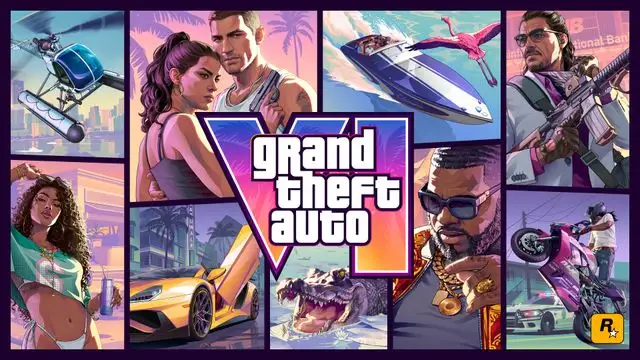
Win a full copy of GTA 6 Ultimate Edition.We're giving away full copies of GTA 6 Ultimate Edition in several draws through launch. Enter with your email, then join in once on the site. One entry per person.
Prize
A full copy of GTA 6 Ultimate Edition
Email first, then one site action during the draw window.
That is the paradox of GTA 6's influence on the 2026 calendar. Even the possibility that it launches on time has reshaped the entire year. The fear of competing with Rockstar has produced a release schedule that is front-loaded, overstuffed in Q1 and Q2, and barren in Q4 in a way that has no real precedent.
Whether GTA 6 ships on November 19 or not, the industry has already made its bet, and the empty months of October and December are the clearest evidence that everyone is already getting out of the way once Rockstar inevitably makes its move.
In the meantime, Take-Two has its hands full fighting off AI-generated videos, GTA-likes in Fortnite, and mods that keep on popping up every now and then, while Rockstar is still under intense scrutiny by the UK government for its recent firings.


