


Mainstream outlets, particularly NBC News, have started asking exactly why movies are still coming out on Blu-ray, music is experiencing a vinyl resurgence, and books are still filling shelves, even as video games are the first major entertainment medium to go fully digital.
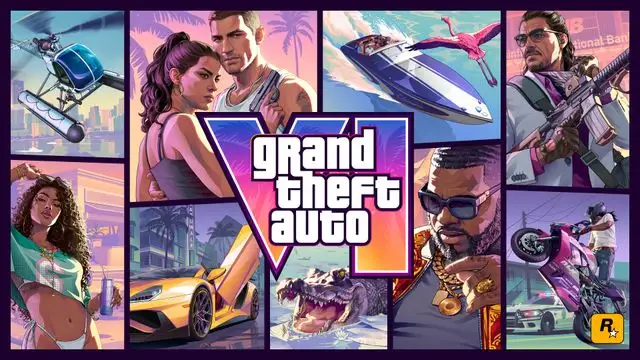
It's a valid question, as Grand Theft Auto VI, with its code-in-a-box physical edition, is set to become the highest-profile title to cross that proverbial bridge come November.
Every other major entertainment industry has kept, and still keeps, a physical option alive alongside digital. You can stream a film or buy the 4K disc. You can stream an album or buy the record. You can read on a Kindle or own the hardcover. Games are the only medium in which the physical version is actively culled rather than allowed to shrink into a niche.
Why is that?
Well, there's an argument that games aren't the same product as films or albums. A Blu-ray plays the movie, and a record plays the album, but a modern game disc frequently does not play the game. Instead, it installs a fraction of it, then downloads dozens of gigabytes of patches, updates, and day-one content before you can play.
So when Sony kills the disc, it is removing something that had quietly stopped functioning like real physical media years ago, with Grand Theft Auto V: Expanded and Enhanced and Grand Theft Auto V: Enhanced being actual examples.
Not to mention, Sony owns the PlayStation brand, the storefront, and the payment system behind it. It's this type of control that lets the world's leading console manufacturer decide that the physical option is over, in a way that film studios and publishing labels never could. Because of this, the expectation is that physical discs will go the same way as phones did with headphone jacks and laptops with optical drives.
Initially, there was outrage, then people accepted the new reality, and eventually, everyone moved on. It's why some analysts are confident that, even with the ongoing PlayStation Plus boycott and petitions, Sony won't budge from its stance.
However, this ignores the fact that losing physical games costs you ownership. Digital games are essentially licenses that manufacturers can revoke or delist, or that you lose access to when a service shuts down.
Sony can be right that sales will not suffer, and fans can be right that they are losing something real.
Physical Media Across Entertainment
Medium | Current Physical Status | Notes |
|---|---|---|
Movies | Blu-ray and 4K discs still produced | Strong collector market persists |
Music | Vinyl resurgence alongside streaming | Physical sales actively growing |
Books | Print editions widely available | Digital and physical coexist comfortably |
Video games | Sony ending new disc production in 2028 | GTA 6 already ships as a code in a box |
How each major entertainment medium currently handles physical formats alongside digital.
Games did not go digital-first because players wanted it. They went digital-first because the format was already hollowed out, the platform holders had the power to force it, and the money was significantly better on their side. Most PS4 and PS5 full-game sales were already digital. Removing resalable discs also removes competition from used copies.
Where the next Grand Theft Auto fits into this is as the biggest test case anyone could ask for. It is the most anticipated game in years; it is arriving right at the transition point, and its physical version is already a code-in-a-box with no disc. If a game this size can ship discless and still break every sales record, which all signs suggest it will, then the industry gets its proof that physical media was never important.
Rockstar wasn't the one who started the entire thing, but GTA 6 is about to become the evidence used by manufacturers to justify it. Its discless announcement came before Sony's, and every publisher will use it as proof going forward.
The comparison to movies and music, while emotionally powerful, may actually be flattering to games in a way that obscures the problem.
Vinyl and Blu-ray survive largely as collector and enthusiast formats. Physical games were heading the same way, toward a small but real niche. What makes the Sony decision different is not that games are abandoning physical faster than other media did.
Rather, it's that games are finding themselves denied the chance to become a niche entirely. Nobody is forcing vinyl out of existence. Sony is actively ending disc production. No one who wants to pay for it can anymore. Sony is denying games the graceful, eventual retirement that every other format has gotten or is getting.
GTA 6 giveaway
Win a full copy of GTA 6 Ultimate Edition.We're giving away full copies of GTA 6 Ultimate Edition in several draws through launch. Enter with your email, then join in once on the site. One entry per person.
Prize
A full copy of GTA 6 Ultimate Edition
Email first, then one site action during the draw window.
Mainstream outlets asking why games are different is a sign the story has escaped the gaming bubble entirely. The answer, unsatisfying as it is, comes down to power and margins rather than any grand principle about the medium, and GTA 6 is about to demonstrate, in record-breaking numbers, exactly why the industry feels safe making the call.
It will be interesting to see if Sony's silence in the face of the backlash will hold. In the meantime, the European Union has confirmed it won't intervene in Sony's decision, while politicians in France and Brazil are raising awareness, with one, in particular, filing a bill that would protect continued access to digital games after essential services are discontinued. It does not require Sony to keep manufacturing physical discs.