

Whenever we look at any kind of Grand Theft Auto 5 or Online related news or discussion, the success of the game is bound to come up. We constantly hear about legendary sales figures, upwards trending purchases, Shark Card revenue, a massive active player base and so forth. And yet, Rockstar and Take-Two don't seem all that intent on expanding the franchise and tapping the vast potential it carries within.
Other than some of the collector's items in the Rockstar Warehouse, the developers' own online store, the only GTA products out there are the games. GTA 5 has made it clear that the franchise has more than nestled into a mainstream role, and yet it barely expanded beyond this while less popular, niche titles have multimedia setups and a wider array of merch.
There are a handful of games with fewer players than GTA Online that boast a significantly larger out-of-game footprint. World of Warcraft's subscriber base has been floating around 10 million, usually dipping under, these past years. Blizzard's own store has countless more products than the Warehouse next to armies of third-party merchandise producers. Decorative figurines, beer kegs and more are available. The franchise recently got its first theatrical movie, it has a massive library of tie-in books.
While popular among gamers, Bioware's two current franchises, Dragon Age and Mass Effect together have a fanbase which amounts to a fraction of GTA 5's audience. And yet the Bioware store is filled with all kinds of neat collector's items, and the games have several tie-in books, board games, figurines and more.
Looking beyond the realm of video games, GTA even has the potential to grow in the image of one of the largest multimedia properties in the world: Star Wars. Beyond movies, books, TV shows, games, comics, board games, tabletop games, and so on, merchandising has exploded for this property.
While we've learned that things were tamer in other regions, Europe was hit with a wave of Star Wars merch around the time of Episode VII's premiere that was absurd. The name was slapped on entirely unrelated products with zero relation to Star Wars beyond the licensed ad printed on the packaging. Paper tissues, shower gel, napkins, ketchup-filled sausages, soft drinks, beach balls, perfume, air freshener, detergent, milk, and many more miscellaneous items had the logo and Kylo Ren in various poses printed on them.
We're not suggesting that GTA's popularity rivals that of Star Wars, since we know that's absurd — for now. However the exponential growth and, even more so, the continued growth of GTA 5 and Online proves that this is a franchise that nestled comfortably into the public knowledge, and has achieved a measure of reach few, if any, other games have.
Rockstar's collaborative April's Fools joke with IGN and the AMC was a trailer mock-up for a GTA television show. While the trailer itself had some low-quality special effects (because no one is going to spend a whole lot on an April's Fools joke), the editing of the trailer itself was fantastic and we would have loved to see a legitimate take on it.
The community was similarly inclined with the majority of reactions amounting to fans wishing something similar would actually be produced. GTA's setting and themes are, dare we say, generic enough to be easier to break into an even more mainstream audience on the small screen than most other game properties.
Of course in some areas the generic nature of the lore, if it can be called as such, could be a hurdle. While stories about crime, greed, drugs and money are common enough, it would be difficult to distinguish a similar tale as inherently GTA in a licensed tie-in book. Then again, adding Rockstar's signature satire and humor while peppering it with game references such as the fake car brands might be enough.
Expanding into a multimedia franchise is never an easy process, as this obviously involves a lot of investment and risk — however we're certain that this would work out well for GTA. The community is proof enough of this, as we're sure there are millions of people out there who'd jump at the chance to grab hand-painted figurines depicting the three protagonists for their displays, for example, and an actual GTA TV show would shatter ratings.
While there is plenty bad to be said about the modern tendency for media to go the way of adaptations or sequels over original content, the frame GTA's setting would give for a serialized TV show telling an original story in the franchise is perfect. While grounded primarily in realism, GTA has always had a side-dish of crazy and over-the-top going on. It walks the fine line of depicting things that could happen, but never do.
And then there is merchandising. Merch has become the true sign of popularity for IP these days, as unless you have a big enough following, you'll struggle to make back the money invested in developing and manufacturing said merch. While we're not saying we want GTA branded tissues (though if they would smell like weed, or money, that would be pretty rad), more collectibles for the fans.
We've written about the franchise's eligibility to become a cinematic universe, tied in with Red Dead Redemption and Manhunt, but it's not like Take-Two themselves haven't thought about this. In fact, it was recently announced that the company has licensed a number of properties to be made into films by an unnamed studio.
We're certain that GTA is among these licensed properties — it is the most obvious candidate, after all. Strauss Zelnick cited the rocky history of video game films as the reason for why Take-Two isn't ready to invest more money and effort into this venture, and that reasoning is fair.
If GTA would expand into such a major property as outlined above, it would become the first western video game to do so. As mentioned previously, we'd say that Warcraft is the largest western video game IP in terms of multimedia ventures, but even that doesn't have a show (the movie is a great step, though).
Of course, things are a whole different story in Japan. Many of Nintendo's properties are major multimedia sensations globally, with Pokémon being a prime example. Countless games, anime, movies, and a mindboggling amount of merchandise have made it into a vast media empire. The Legend of Zelda is another which (little known fact) had a cartoon run in 1989.
GTA 6 giveaway
Win a full copy of GTA 6 Ultimate Edition.We're giving away full copies of GTA 6 Ultimate Edition in several draws through launch. Enter with your email, then join in once on the site. One entry per person.
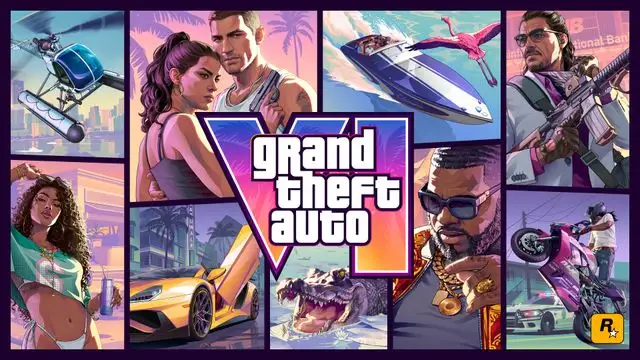
Prize
A full copy of GTA 6 Ultimate Edition
Email first, then one site action during the draw window.
As gaming is becoming increasingly mainstream, and climbing out of the archaic misconceptions of the general public, the opportunities for IPs that started off as games to become massive, multi-media sensations are more common than ever, though it might still be too early for some.
There is, however, one major hurdle for GTA to jump over if it is to fulfill this particular destiny: children. What we mean by this is that if you look at most multi-media franchises, children factor into the audience in a major way even if they are not the sole demographic at whom the products are aimed. Pokémon and Star Wars are perfect examples of this.
George Lucas is adamant that Star Wars is, and always has been, aimed at 12-year-olds, a stance he backed up once again at this year's Star Wars celebration in Orlando. While some of the themes in the films and Extended Universe (unfortunately no longer canon) works oppose this assertion, the hordes of toys — and young fans — support his claim. Plus, you know, he made the thing. As for Pokémon, well, you need only look at it.
GTA will never in any way be suitable to be marketed towards children. While it may be true that an alarmingly large chunk of GTA Online's players may seem to be 12, that doesn't change the fact that Rockstar could never openly tap that market without major outcry. They'll never get a Lego deal, for example, nor will there ever be any GTA cocaine lockup playsets.
Of course, there are entirely adult-oriented multi-media franchises, such as A Song of Ice and Fire. Between the hyper-popular TV show, the original books and the various tie-in video games, not to mention the vast amounts of merchandise created for the property, the violent and sexual content clearly hasn't stopped the IP from becoming a massive hit.
Few games have the kind of popularity Grand Theft Auto 5 has won over the years, and it's easy to feel that Rockstar simply isn't making as much use of the opportunities offered by this as it could. Of course, the execs over at Take-Two have likely chewed through Excel spreadsheets a thousand times to see how profitable it would end up being, and there may be a handful of perfectly good reasons why this isn't happening. But it's still one of the select few to have such opportunities in the first place.
We hope to hear more about the licensing deals with the movie studio in the near future to get a better picture of where the franchise is heading outside the realm of gaming.


