
These are busy times for Take-Two Interactive. The release of Red Dead Redemption 2 is drawing near, the company recently acquired mobile developer Social Point, their games are selling very well and now it seems they're planning to expand into motion picture. Must feel good to be Strauss Zelnick right about now.
Between Rockstar Games and 2K, Take-Two is enjoying successful release followed by successful release. GTA 5 is still going strong, and is one of the main financial pillars of the company, while many of 2K's releases are enjoying praise and fame among the hardcore gaming community. It seems, however, that they're not content with sticking only to highly popular video games.
In a recent interview with MCV, the company's CEO, Strauss Zelnick, revealed that Take-Two is licensing some IP for movie adaptations. It was more of a tease than a reveal, really, considering that he didn't let slip anything else. We don't know what IPs got licensed, to who, and when to expect more info.
What we do know, however, is that Take-Two is playing things safe. Movie adaptations of video games haven't had the best run, so to say, with even the best ones only being passable at best if most reviewers and critics are to be believed.
We have licensed a couple of titles for motion picture production and we don’t have much more to say about that yet.
Naturally, anyone who sat through one of Uwe Boll's game adaptations will shudder right after they're done having a seizure. While recent years saw a marked improvement with Warcraft, Ratchet & Clank and Assassin's Creed (which I liked, shut up), it's really only the fans of each franchise that admit to liking the flicks, whereas reviews still range from lukewarm to scathing.
With such a shaky market segment, it's no surprise Take-Two is cautious. Instead of pumping their own cash into what might end up being a flop, the company as set up licensing deals. This means that movie studios purchase the rights to use Take-Two IP in their movies, in the hopes that the pre-existing fame and draw of these franchises are enough to make a return on the investment. Take-Two would receive royalties as part of the deal, and retain creative control.
We are open-minded. We are certainly not going to use our own balance sheet to invest in motion pictures and TV. If other people want to license them and we can retain creative control, we are open-minded. The track record of the conversion of video game IP to motion pictures is spotty at best.
The company hasn't ventured into the realm of motion picture ever before, however the extensive motion capture work that goes into some of the games published under the label mean that independently, both developers have had plenty of contact with actors. Of course, that's all irrelevant due to the whole licensing plan, and everyone knows motion capture is a whole other animal.
It's unfortunate that Zelnick wasn't prepared to reveal anything more concrete about the projects, however there are a few things we can figure out with even such little information. The basis of such a licensing plan is that the studio picking up the project banks on the fame of the franchise to make marketing easier, and to give some measure of guarantee that people will actually watch the movie.
The more popular the franchise is already, the more likely it is that the project will be profitable, meaning the more attractive it is for movie studios. A relatively unknown property wouldn't interest them, as the deal quite clearly benefits Take-Two here, while something hugely popular would make signing such a deal worth it.
Naturally, by something hugely popular we mean GTA. Time and again we've discussed how the mainstream appeal the franchise has built for itself is the key to the most recent game's success, and this would show in the case of a movie as well. Considering that movies are infinitely more accessible than games, since all you need to do is go to a cinema and pay significantly less for a ticket, they generally have bigger audiences than games.
Now consider that GTA 5 has an audience of 75 million plus those who bought it digitally, and you've got yourself one hell of a box office record. A GTA movie would naturally work best as a big-budget, R-rated, Hollywood action flick packed full of the crass humor, satire and violence the franchise is known for.
Adapting one of the existing games' storylines into a film would probably be a bad idea. Each GTA game is packed full of content, much of which would need to be cut for a feature film, not to mention that each game has an identity of its own which is in many ways also shaped by the side activities, not only the main storyline.
Another issue in a direct adaptation would be that of actors. While in the case of GTA 5, the voice actors of the three protagonists look almost identical to their characters, since they acted as face models too, there are many other characters in the game who look nothing like their voice actors. So what do you do, change the appearance, or change the voice?
A whole new story set in GTA's fictional and satirical version of the USA would be the best venue to take should a movie adaptation of this franchise ever be made. While Zelnick did say that they'd be licensing these projects, Take-Two would retain creative control, therefore Rockstar's talented team of writers, the masters of satire that they are, would likely helm the story and script.
GTA 6 giveaway
Win a full copy of GTA 6 Ultimate Edition.We're giving away full copies of GTA 6 Ultimate Edition in several draws through launch. Enter with your email, then join in once on the site. One entry per person.
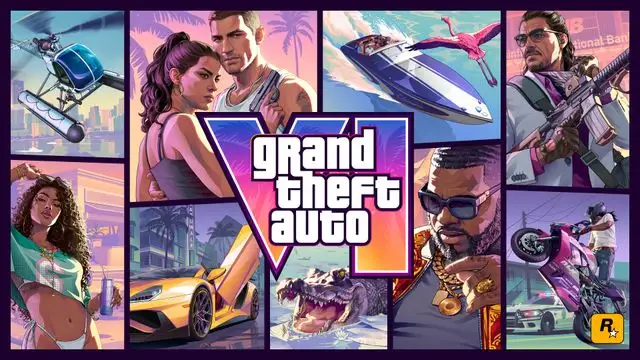
Prize
A full copy of GTA 6 Ultimate Edition
Email first, then one site action during the draw window.
Let's not forget that two GTA movies have already been made in the past, though one of them is of questionable legality. A live-action short film was created to advertise GTA 2, and parts of it were used in the game's opening cinematic. The other was a docu-drama starring Daniel Radcliffe of all people, about the controversy surrounding the franchise and Jack Thompson's attempts to have it banned.
The latter was created without any involvement from Rockstar or Take-Two, and both have openly condemned the production, though no legal steps have been taken. Since the GTA 2 promo video is considered non-canon, and the "Gamechangers" documentary is about the game, there aren't any true GTA films out there. Yet.
Of course, since Zelnick did mention licenses in the plural, GTA may not be the only Rockstar property to grace the silver screen in the coming years. With the rapidly approaching release of Red Dead Redemption 2, that franchise is getting more and more media attention, and is probably Rockstar's second most popular IP, making it an attractive choice for studios.
A high-budget, live-action GTA movie would almost definitely make a whole lot of fans really happy, however as things stand, it's likely to be several years before we hear anything concrete about these licensing deals. In the meantime however, one can hope and dream.


