

When thinking about a game company as big and successful as Rockstar Games, with their portfolio and backing from Take-Two Interactive, you wouldn't expect them to be looking for handouts - and yet. The developer behind Grand Theft Auto VI has claimed more than half a billion pounds in UK government tax relief since 2015, and the numbers are raising serious questions about whether that level of public support is justified for a studio this profitable.
According to newly published financial accounts reported by The Scotsman, Rockstar Games UK received over £70 million in 2024/25 through the Treasury's Video Games Tax Relief (VGTR) scheme. In that same year, the Edinburgh-based company posted profits exceeding £87 million on a turnover of £508 million, making it the fourth consecutive year Rockstar's UK operations crossed the half-billion-pound revenue mark.
Here's the part that has politicians paying attention. In the same year Rockstar collected £70 million in tax relief, the company paid out £85 million in dividends to shareholders. Over the past decade, total dividends exceeded £400 million, while cumulative profits topped £604 million. Does this level of profitability and success really need tax relief? In this economy?
The VGTR scheme was introduced in April 2014 to encourage video game production within the UK. Companies can claim back up to 20% of their core development costs. Since the scheme launched, Rockstar has been one of its biggest beneficiaries, claiming a total of £504 million, helping offset the development costs for award-winning titles like Red Dead Redemption and the upcoming Grand Theft Auto sequel.
Just to make things clear, Rockstar isn't doing anything illegal. The question isn't so much that Rockstar is engaged in fraudulent activity as it is whether a company generating this much profit, owned by a publicly traded parent company, Take-Two Interactive, and paying out hundreds of millions in dividends, should be receiving this scale of taxpayer-funded support. The debate is not legal, it is ethical.
Edinburgh North and Leith MP Tracy Gilbert has been the most vocal critic, coining the phrase "Grand Theft Tax" to describe the situation, as reported by The Scotsman. She raised the matter in the House of Commons, telling Parliament that when a company receives tens of millions in government-backed tax relief, "it is reasonable to expect that it upholds basic standards of fairness and respects workers' rights."
GTA 6 giveaway
Win a full copy of GTA 6 Ultimate Edition.We're giving away full copies of GTA 6 Ultimate Edition in several draws through launch. Enter with your email, then join in once on the site. One entry per person.
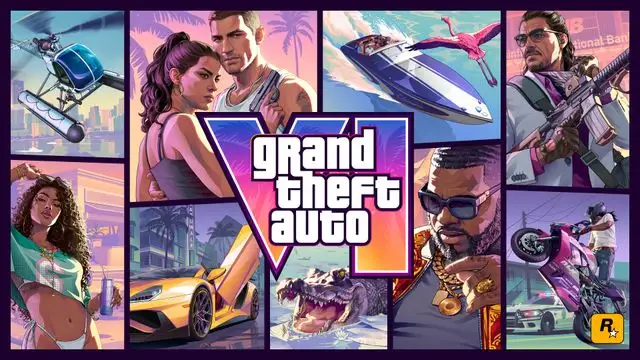
Prize
A full copy of GTA 6 Ultimate Edition
Email first, then one site action during the draw window.
That last point connects to the other major controversy surrounding Rockstar right now. The company fired over 30 staff members in October 2025 in what the Independent Workers' Union of Great Britain (IWGB) has called "the most ruthless act of union busting in the history of the games industry." Rockstar maintains the dismissals were for gross misconduct, alleging that the employees discussed confidential information, including specific features from unannounced titles, in a public forum.
The Glasgow employment tribunal denied the workers' application for interim relief in January 2026, though the IWGB noted that the ruling "does nothing to suggest that Rockstar will not be found guilty of unfair dismissal when the case goes to trial." The full hearing will proceed with a lower burden of proof. Rockstar has welcomed the interim relief ruling and categorically denied all union-busting allegations.
In a statement to The Scotsman, the company said that since the VGTR's introduction in 2014, it has "invested enormously in the UK, creating more than a thousand jobs in the creative sector across Scotland and England." They argue their investment "has helped put the UK at the cutting edge of entertainment globally and contributed significantly to UK economic growth, skills and innovation."
Rockstar North in Edinburgh, which started life as DMA Design in Dundee, is one of the UK's most significant game development studios. The Grand Theft Auto franchise has sold more than 455 million copies worldwide. Rockstar employs people across offices in Edinburgh, Dundee, London, Leeds, and Lincoln. The economic ripple effects of that employment are real.
For what it's worth, this kind of controversy is not unique to Rockstar, or even to the UK. Governments around the world use tax incentives to attract major entertainment productions. The film industry has operated under similar schemes for decades. Without these incentives, companies would simply develop their games somewhere else, taking jobs and economic activity with them.
With GTA 6 set to launch on November 19, 2026, and expected to generate $3.2 billion in its first year, this debate is not going away. If anything, it's going to get louder.


