

Eighteen years after its release, Grand Theft Auto IV is still revealing details that many players may not have known about, and this one might be the darkest Easter egg that Rockstar Games has ever put in a game - and unfortunately all too topical these days.
If you boot up GTA IV, head to one of Liberty City's TW@ internet cafes, and type in littlelacysurprisepageant.com, you won't find a child beauty pageant.
Instead, you'll find a shutdown notice from the LCPD, informing you that the website is a sting operation, that your IP address has been logged, and that "We See It All. We Know It All." The police scanner immediately kicks in, with the dispatcher describing your character as a "sexual deviant attempting to access explicit images." Then you get a five-star wanted level.
Well, just four stars if you haven't unlocked Algonquin yet, but that's besides the point. The entire thing is a law enforcement trap designed to catch predators, and the game punishes you with the maximum wanted level just for clicking on it. It's one of the most extreme consequences for a non-violent action in Grand Theft Auto, and it's been hiding in plain sight since 2008.
See a featured GTA BOOM Bookie market here.
The market card is loading. If it does not appear, open The Bookie for the latest odds and active questions.
Open this market in The BookieFun fact: this actually didn't start with GTA IV. The Little Lacy Surprise brand first appeared in Grand Theft Auto: Vice City Stories, where radio commercials on Flash FM and Radio Espantoso advertised a line of "fashion underwear" for children. The ads were deliberately designed to be as uncomfortable as possible. The brand's mascots included characters named "Horny the Unicorn" and "Tapeworm."
The commercials featured children saying things that strongly implied both exploitation and incest. The whole thing was Rockstar's characteristically unsubtle satire of real-world child beauty pageants and the sexualization of minors. On Radio Espantoso, the ad featured Jack Howitzer, a recurring in-game character who shows up across multiple GTA games. On the satirical talk show Pressing Issues, panelist Bryony Craddock called the brand out for exactly what it was. The satire was layered, self-aware, and deeply uncomfortable by design.
Then, two years later in GTA IV, Rockstar turned the joke into a trap. Instead of just referencing the brand again as a radio gag, they built an entire in-game website around it and turned it into an FIB sting. The site even gets mentioned on Weazel News within the game, though it's easy to miss if you're not paying attention to the in-game media.
The thread didn't end there, either. In Grand Theft Auto: Chinatown Wars, protagonist Huang Lee receives a spam email from "Illegal Teen" that references the same sting operation. The email claims the FIB "no longer controls the site," with an asterisk that clarifies "on an hourly rate." It's a small detail, but it shows Rockstar was still building on the joke years later.
Finally, in Grand Theft Auto V, the brand comes up one more time. During Franklin Clinton's mission Deep Inside, the actress he's tasked with "rescuing" mentions that when she was three years old, her parents put her in a Little Lacy Surprise commercial. It's a throwaway line that most players would never catch, but for anyone who remembers the Vice City Stories ads, it adds a deeply unsettling layer to the character's backstory.
GTA 6 giveaway
Win a full copy of GTA 6 Ultimate Edition.We're giving away full copies of GTA 6 Ultimate Edition in several draws through launch. Enter with your email, then join in once on the site. One entry per person.
Prize
A full copy of GTA 6 Ultimate Edition
Email first, then one site action during the draw window.
What's genuinely impressive about this Easter egg is the way it uses gameplay as commentary. Rockstar could have just made Little Lacy Surprise another radio gag or background detail. Instead, they built a mechanic around it. Visiting the site has real, immediate consequences for the player: you get the maximum wanted level, and the police come after you with everything they have. The game treats your character the way law enforcement treats (or should, at least) suspected predators, with overwhelming, lethal force. It's one of the few moments in GTA where the game explicitly takes a moral stance through its mechanics, not just its dialogue or radio satire.
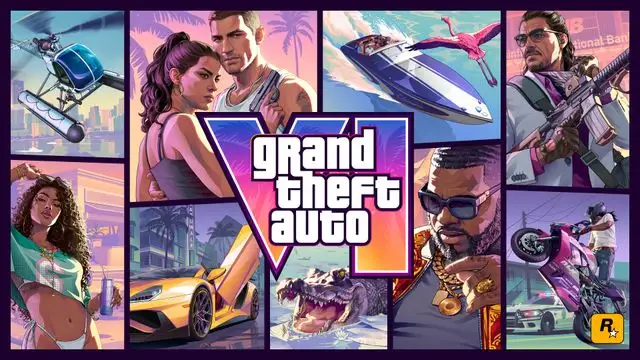
For those looking forward to Grand Theft Auto VI finally releasing in November, this kind of layered, cross-game world-building is exactly what makes Rockstar's universe feel lived-in. The fact that a throwaway radio ad from a 2006 PSP game became a functional in-game website in 2008, then got referenced again in a 2009 DS game and a 2013 open-world blockbuster, shows a level of continuity that very few studios bother with.
With the upcoming sequel set in Leonida, a fictional version of Florida, and Rockstar building what Take-Two Interactive CEO Strauss Zelnick has called "the most extraordinary title anyone's ever seen in the history of entertainment," the in-game internet is almost certainly going to be even more detailed this time around, especially after Rockstar was spotted buying out certain domain names.
GTA IV had over 100 browsable in-game websites. GTA V expanded on that significantly. If GTA 6 follows the same trajectory, and if Rockstar maintains its tradition of burying dark, satirical commentary in places most players will never think to look, the modern-day internet in Vice City is going to be something else entirely.


