

Gamers with a few years of community activity under their belts will remember the era when PC gaming "died" every year or so - things are very different now, and even the publisher of Grand Theft Auto 6 recognizes this. Strauss Zelnick, CEO of Take-Two Interactive, shared his thoughts during a recent interview on CNBC's Squawk Box program. The irony, however, is that his company's biggest upcoming release isn't confirmed for the platform he's championing.
I think it's moving towards PC and business is moving towards open rather than closed. But if you define console as the property, not the system, then the notion of a very rich game that you engage in for many hours that you play on a big screen—that's never going away
Zelnick's comments come at an interesting time. Microsoft, despite insisting it's developing new Xbox hardware, has simultaneously declared that everything is an Xbox now. If Xbox games run on various devices, including PCs, and those devices can access broader libraries than the Xbox console itself, what's the value proposition for dedicated hardware?
Valve complicated matters further with last week's announcement of the new Steam Machine, described as a console-PC hybrid that connects to televisions but runs PC games through the Steam platform. If it walks like a duck, swims like a duck, and quacks like a duck, then doesn't that make it, for all intents and purposes, a duck? Of course, the absent elephant in the room is Grand Theft Auto 6.
Take-Two's biggest asset and the most anticipated game in the industry remains unannounced for PC despite Zelnick's comments. GTA 6 currently has confirmed plans only for PlayStation 5 and Xbox Series X/S, with a November 2026 release date following its second delay. Though lacking official confirmation, it is generally accepted by the community that an eventual PC release is inevitable.
This pattern follows Rockstar Games' usual MO. Grand Theft Auto 5 launched on PlayStation 3 and Xbox 360 in September 2013 but didn't arrive on PC until April 2015. Red Dead Redemption 2 saw a shorter but still substantial delay between console and PC versions. It's no secret that Rockstar is a perfectionist, which is why they take their time optimizing console releases before adapting games for Windows (and why Video Games Deluxe, now Rockstar Australia, took over fixing Grand Theft Auto: The Trilogy – The Definitive Edition).
GTA 6 giveaway
Win a full copy of GTA 6 Ultimate Edition.We're giving away full copies of GTA 6 Ultimate Edition in several draws through launch. Enter with your email, then join in once on the site. One entry per person.
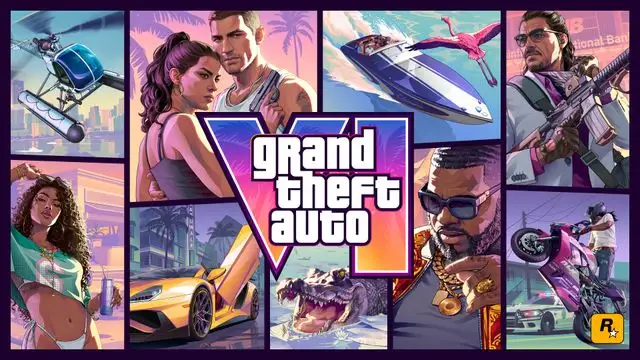
Prize
A full copy of GTA 6 Ultimate Edition
Email first, then one site action during the draw window.
GTA 6 will almost certainly break records again regardless of platform availability at launch. In fact, it has already set new records even though it's still at least a year away from being released. Considering all this, it is surprising that Take-Two and Rockstar are initially ignoring the platform which Zelnick himself described as the future of gaming.
Nevertheless, the situation by fall 2026 could make the console-exclusive approach look increasingly questionable. The Xbox Series S/X has struggled compared to the PlayStation 5, with the Xbox Series S in particular causing major optimization issues over the past five years. Without announced support for Nintendo Switch 2, GTA 6 essentially becomes a PlayStation attraction at launch, as the rumors suggest.
PlayStation's strong position provides some justification for Zelnick's confidence that console gaming will remain viable. Even as PC gaming expands, the PlayStation brand can and will hold strong. The console continues to offer the most seamless living room gaming experience for many consumers who prefer plug-and-play simplicity over building or maintaining gaming PCs.
With that said, it's clear what Zelnick thinks of the gaming industry in the long term, but Take-Two's actual release strategies suggest the transition won't happen anytime soon. Console exclusivity windows and staggered platform releases will likely persist even as executives acknowledge where the industry is headed.


