

Over the course of the past few years, the video game industry has taken a clear turn towards being reliant on regularly changing trends. This has, in turn, given YouTubers, Streamers and so-called "influencers" greater significance and what some might even call power.
What genres the influencers choose to stream and what becomes their most popular content are co-dependant, with a perfect example of this phenomenon being the Battle Royale craze.
The industry is in flux with the food chain becoming more fluid. On the one side, we have games like PlayerUnknown's Battlegrounds or Fortnite – one evolved out of a mod and being made by an Indie company, the other a free-to-play game mode of an otherwise paid survival game.
On the other side, you have huge AAA titles like Grand Theft Auto 5 which has sold almost 100 million copies and is the most profitable media product ever created.
Taking a snapshot of the current landscape, traditional AAA is still at the top of this industry. GTA 5 and its ilk, created by developers with countless studios strewn across the globe and published by major corporations with many labels under their wing, with multi-million dollar marketing campaigns and wide-reaching franchising efforts dominate the market.
Even though they're not as defining as they were a few years ago, military FPS IP like Call of Duty and Battlefield still make insane amounts of money, Ubisoft's Assassin's Creed franchise is getting its 12th main installment.
Trends have always been a major part of how the multi-year gaming landscape looks like. During the golden age of military FPS games like the previously mentioned CoD and Battlefield, every other AAA studio was pushing out a linear shooter game with scripted "cinematic" set pieces, one or two scenes manufactured to be shocking and so forth. Then came the survival game craze, then suddenly everything became open-world, and now every game is getting a battle royale mode.
Multiple fads also coexist. The retro-fuelled nostalgic indie resurgence of the late noughties coincided with the military FPS era when every small developer would make a pixel-art 2D side-scrolling platformer. The spread of the open-world sandbox spans several other fads, but we only noticed it when the latest installments of previously decidedly non-sandbox games got the treatment.
Grand Theft Auto 5's success is a strange beast that might never be replicated. The game was first released in 2013 for Xbox 360 and PlayStation 3, then again in 2014 for Xbox One and PlayStation 4, then a third time in 2015 for PC. This staggered release schedule helped its longevity and greatly extended the peak sales period for the title. It also got a new edition this year which likely jogged sales once more.
The game also enjoyed an extremely extensive marketing run. Of the estimated $265 million budget, half is said to have been spent on marketing alone.
Beyond this, we are talking about an IP that has been popular in the mainstream since 2001 and around even longer. Over that time the game has reached a measure of brand recognition that few other franchises have – this has been helped, albeit inadvertently, by the several highly publicized attempts to have GTA banned due to its violent content.
These are factors that you can't just replicate on a whim, and some are even beyond what money can buy.
PUBG and Fortnite are doing extremely well – PUBG recently reached the 50 million copies sold milestone and Fortnite: Battle Royale, a free-to-play game, has a reported 125 million players. Fortnite's revenue relies on microtransactions and Battle Passes, while PUBG earns via a blend of sales and in-game purchases.
GTA 5 in particular also enjoys the benefits of not being the product of a trend while incorporating current trends into the game with content updates. Battle Royale in particular has been brought to GTA Online via the Motor Wars Adversary Mode. Whenever the next big fad pops up, Rockstar can just bring that to their games via DLC and reap the benefits of both worlds.
However, like all fads, eventually the battle royale craze will die down. Another popular game will pop up, Streamers will migrate and interest will droop. Gaming is becoming increasingly mainstream, growing to eventually become the most widely consumed form of media. This, however, imparts a measure of dynamicity to how quickly these trends rise and fall.
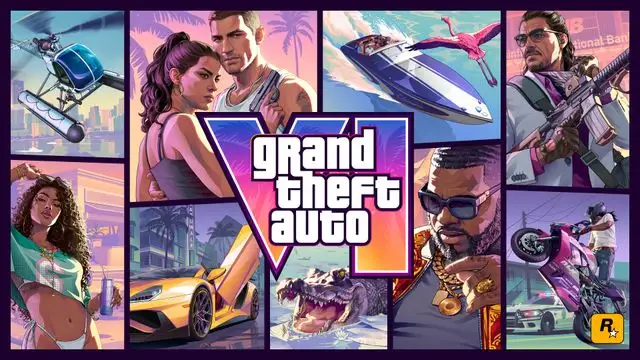
GTA 6 giveaway
Win a full copy of GTA 6 Ultimate Edition.We're giving away full copies of GTA 6 Ultimate Edition in several draws through launch. Enter with your email, then join in once on the site. One entry per person.
Prize
A full copy of GTA 6 Ultimate Edition
Email first, then one site action during the draw window.
Fortnite, PUBG and the other battle royale games are so popular because they are simple to understand, hard to master, easy to get into and entertaining to watch. Essentially, battle royale games are memes in game form. They come, become briefly yet hugely popular, then they die. They're accessible and an easy source of entertainment, but ultimately lack substance.
This is the edge that games not built on fads have. Grand Theft Auto, both as a franchise and its individual entries, enjoys longevity and lasting relevance. People still buy GTA 3, Vice City, San Andreas and 4 these days, not to mention how popular GTA 5 still is.
Grand Theft Auto will still be around, still be relevant, and still be popular when the current trends get replaced.
At one point, PlayerUnknown's Battlegrounds may actually outsell GTA 5 – though this is doubtful – and it's true that Fortnite: Battle Royale currently has a larger player base – though this is due to it being free to play. However, as franchises, neither of these, nor any other battle royale, will reach a level of ingrained cultural relevance.
Battle Royale is a rising star that will eventually crash and burn, while GTA perseveres.


